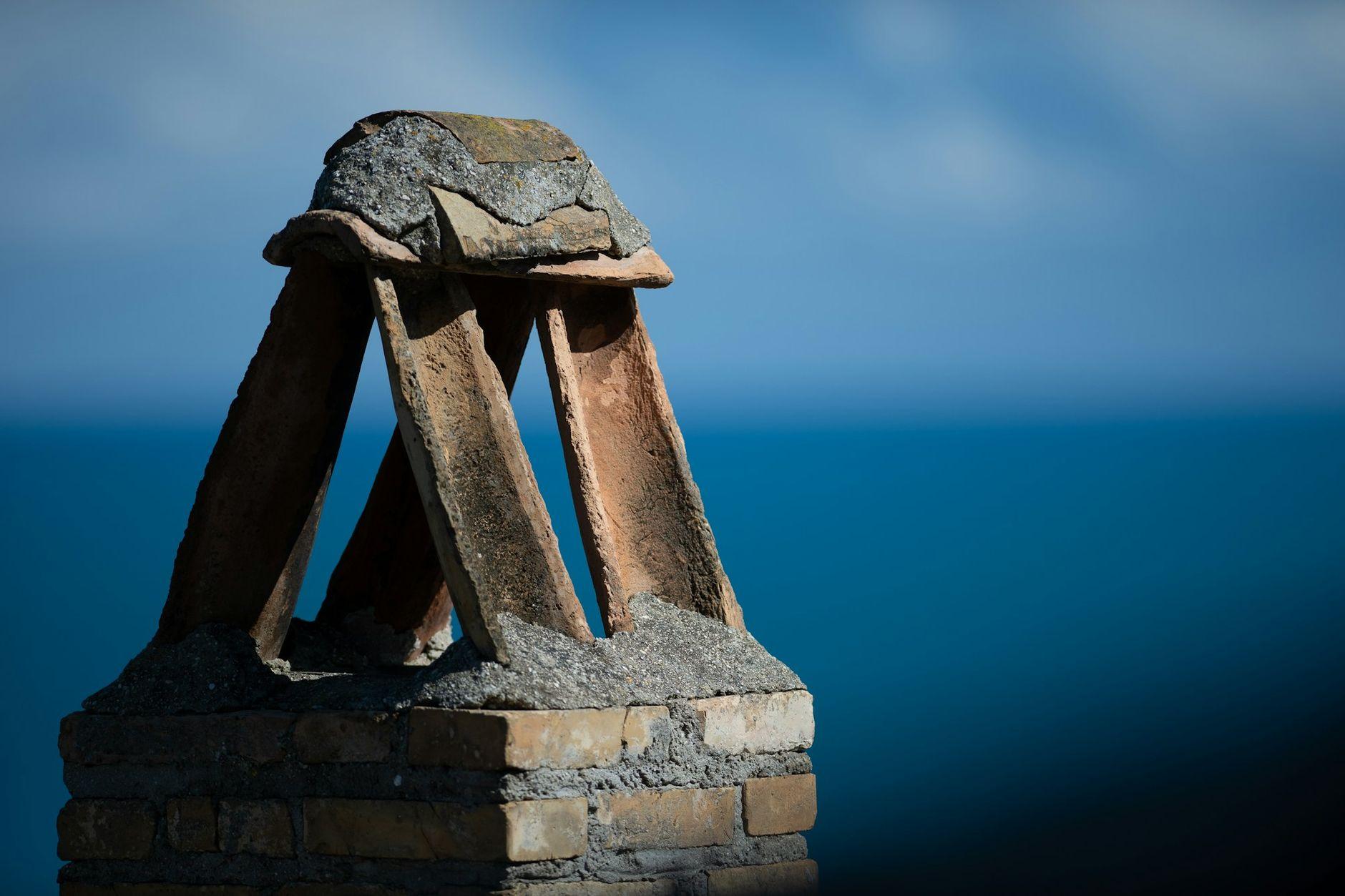
The chimney work behind a gas conversion
Gas burns cleaner than wood, so owners are often surprised when a quote for logs or an insert comes with chimney items attached. The reason is that a gas appliance asks different things of the chimney than a wood fire did. Exhaust from gas is cooler and wetter. A log set needs the damper to stay partly open for good. An insert needs room in the flue for its pipes. Those changes can bring three pieces of work into a conversion in Monterey Park: a liner, damper work, and on some houses a new cover over a framed chimney.
This post explains each one, when it is needed, and how we price it.
Why gas exhaust is hard on an old flue
Wood smoke leaves the firebox very hot, and a clay flue built for wood was sized to carry a lot of it. Gas appliances put out far less volume at a lower temperature, and a good part of what they produce is water vapour. In a large, cold clay flue that vapour can cool before it reaches the top, condense on the tile and soak into the mortar joints. Over years, the joints soften and the tile loosens.
That is not a reason to avoid gas. It is a reason to match the flue to the appliance.
Piece one: a liner
A liner is a new passage inside the old flue. On a gas conversion it comes in three forms.
For a sealed insert, the liner is part of the install: two flexible pipes run from the unit to a cap at the top, one for exhaust and one for fresh air. They are included in our insert price of $2,750 to $5,550.
For a vented log set in a sound flue of reasonable size, no liner is usually needed. The camera tells us whether the tile is whole.
For a log set in a cracked flue, or a gas furnace or water heater that also vents through the chimney, a single stainless liner sized to the appliance is the common fix. It restores a sealed path without rebuilding the masonry.
What sets a liner price
A stand-alone liner is measured before we price it. The figure depends on:
- the chimney height, which sets the length
- the diameter the appliance calls for
- bends or offsets in the flue
- whether insulation is needed where the chimney is close to framing
- roof pitch and how we reach the top
More on how a liner goes in on the chimney liner installation page.
Piece two: the damper
The damper is the iron or steel plate above the firebox that closes the flue when the fire is out. In a gas conversion it goes one of three ways.
With a vented log set, the damper must never fully close while gas can flow. A stop is fitted so it rests partly open. If the damper is rusted shut, warped or missing its handle, it gets freed or replaced first.
With an insert, the old damper usually comes out, because the insert's pipes need the space and the insert itself closes the opening.
With logs, the open damper also lets warm room air slip up the flue between fires. Glass doors across the opening cut that loss, where the log set's maker allows them, and we can price a set of doors with the logs. If drafts bother you most, that is a point in favour of an insert.
See the damper repair page for the work involved.
Piece three: the chase cover
Some homes, especially newer tract houses and condos around Monterey Park, do not have a brick chimney at all. The fireplace is a metal box with a metal flue, enclosed in a framed box on the outside wall. The top of that box is a sheet metal cover with a hole for the flue.
When an owner switches such a fireplace to gas, we look closely at that cover. Old galvanised covers rust and sag, and water collects and then runs into the frame. A replacement in stainless steel, cut to fit the top of your chase, is the usual fix. It is measured on the roof, then made and fitted. The chase cover page has more.
How the pieces add up
On a typical conversion, the order is:
- the camera inspection to see what the flue can do, $385 for a Level 2
- repairs to the top of the stack, if any
- liner, damper or chase cover work the inspection calls for
- the gas unit itself
Not every house needs all of it. Many sound chimneys in Monterey Park and San Gabriel take a log set with nothing more than a damper stop.
Ask for a conversion quote that includes the chimney work. In the form, say which gas option you are considering and whether the fireplace is brick or a metal box with siding around the chimney.
Wood-only items you can skip
A gas conversion also removes some work. Creosote sweeps stop once wood stops; a gas flue needs an occasional check rather than brushing. And a cracked clay tile that would need replacing for wood may be bypassed entirely by an insert's own pipes.
That is why we price the conversion and the chimney work together. Sometimes the insert route costs less overall than a log set plus a liner. Our gas log cost guide and buying a house to convert posts go into the choice in more detail.
Where to start
Begin at our contact page with the address, the fireplace type and the gas option you have in mind. We will arrange the inspection and send one written quote that covers the chimney and the unit.
Want This Priced for Your House?
Sumner Chimney Care measures the firebox, checks the flue and writes up gas logs, an insert or a direct-vent unit with a price beside each. We work from Monterey Park across San Gabriel, Bell and Los Angeles.